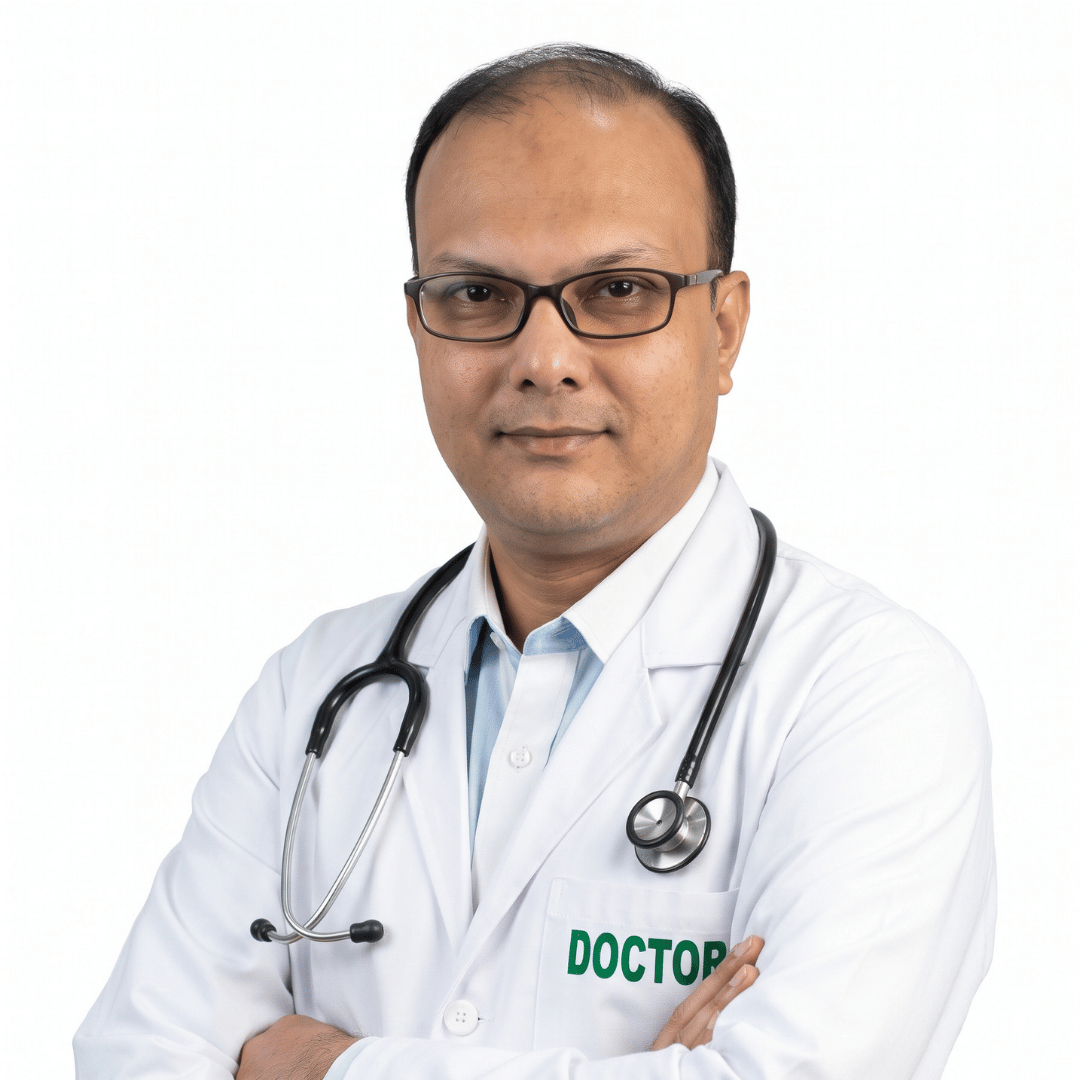
Prof. Dr. Dhiraj Mohon Biswas – Best Brain, Nerve, and Mental Diseases Specialist & Neuropsychiatrist in Khulna
Prof. Dr. Dhiraj Mohon Biswas is a Professor of Psychiatry at Khulna Medical College & Hospital, Khulna, with over 30 years of distinguished clinical, academic, and neuropsychiatric experience in mental health. As an eminent Psychiatrist and Neuropsychiatrist, he provides expert care for dissociative identity disorder, body dysmorphic disorder, anorexia nervosa, bulimia nervosa, and cyclothymic disorder. Patients seeking expert psychiatric evaluation receive evidence-based treatments tailored to ensure mental stability and emotional recovery. His medical practice combines high-precision psychiatric diagnostics with individualized patient care plans.
Professional Biography
Prof. Dr. Dhiraj Mohon Biswas completed his MBBS degree, establishing a comprehensive clinical foundation in general medical sciences. He pursued rigorous postgraduate specializations, earning his Diploma in Psychological Medicine (DPM) from Dhaka University, followed by a Fellowship of the Royal Society for Public Health (FRSH) from the UK, and an esteemed WHO Fellowship in Bangalore—premier qualifications dedicated to the advanced management of brain disorders, neurological overlaps, and severe mental illnesses. Finding the best Psychiatrist in Khulna leads patients to rely on his 30+ years of academic leadership and specialized clinical expertise across top-tier government medical institutions.
His primary clinical focus includes specialized psychotherapeutic integration for dissociative identity disorder, cognitive-behavioral strategies for body dysmorphic disorder, intensive refeeding and psychological protocols for anorexia and bulimia nervosa, and precise mood stabilization for cyclothymic disorder. His diagnostic framework incorporates detailed psychiatric evaluations, psychometric assessments, and comprehensive psychosocial risk stratification to formulate effective, long-term mental health strategies.
At-a-Glance Profile Card
| Profile Field | Details |
| Full Name | Prof. Dr. Dhiraj Mohon Biswas |
| Primary Specialty | Psychiatry (Brain, Nerve & Mental Diseases) |
| Secondary Specialties | Neuropsychiatry & Eating Disorder Management |
| Designation | Professor (Psychiatry) |
| Workplace | Khulna Medical College & Hospital, Khulna |
| Total Experience | 30+ Years |
| Location | Khulna, Bangladesh |
Qualifications & Education
MBBS – Bachelor of Medicine and Bachelor of Surgery
DPM (DU) – Diploma in Psychological Medicine, Dhaka University
FRSH (UK) – Fellow of the Royal Society for Public Health, United Kingdom
WHO-Fellow (Bangalore) – World Health Organization Fellowship in Mental Health
Designation & Workplace
Designation: Professor (Psychiatry)
Workplace: Department of Psychiatry, Khulna Medical College & Hospital, Khulna
Diseases Treated
Dissociative identity disorder requires intensive trauma-informed psychotherapy.
Body dysmorphic disorder demands targeted cognitive-behavioral care.
Anorexia nervosa requires critical nutritional and psychological rehabilitation.
Bulimia nervosa needs specialized psychopharmacology and behavioral therapy.
Cyclothymic disorder requires precise mood stabilizer titration.
Major depressive disorder requires intensive mood stabilization.
Schizophrenia spectrum requires long-term antipsychotic management.
Generalized anxiety disorder demands targeted anxiolytic care.
Panic disorder requires acute panic attack management and therapy.
Obsessive-compulsive disorder (OCD) requires specialized psychopharmacology.
Post-traumatic stress disorder (PTSD) demands trauma-informed psychiatric care.
Dementia and Alzheimer's require behavioral symptom management.
Bipolar affective disorder needs lifelong mood stabilization.
Insomnia and sleep disorders demand sleep hygiene and medical correction.
Somatoform disorders require comprehensive psychosomatic evaluation.
Clinical Specialties & Treatment Areas
Neuropsychiatry & Severe Mental Illness: Specialized protocols for dissociative identity disorder, cyclothymia, and psychiatric conditions with neurological overlaps.
Eating Disorders & Body Image Psychiatry: Precision management for anorexia nervosa, bulimia nervosa, and body dysmorphic disorder utilizing a multidisciplinary approach.
General & Academic Psychiatry: Advanced interventions for anxiety, mood disorders, and psychosis, backed by three decades of academic medical expertise.
Advanced Procedure Breakdown
Comprehensive Neuropsychiatric Evaluation
A detailed, structured clinical interview to assess a patient's cognitive function, mood, neuro-behavioral overlaps, and psychosocial history to formulate an accurate diagnosis for complex conditions like dissociative disorders.
Eating Disorder Rehabilitation Protocols
The careful integration of medically supervised refeeding, electrolyte monitoring, and targeted psychotherapy to treat severe eating disorders like anorexia and bulimia nervosa safely.
Targeted Psychopharmacotherapy & Mood Stabilization
The precise prescription and long-term titration of psychiatric medications to manage chronic mood instability (such as in cyclothymic disorder) while minimizing side effects and maximizing patient compliance.
Condition-Specific Deep Dives
Dissociative Identity Disorder (DID)
A complex psychological condition previously known as multiple personality disorder, characterized by the presence of two or more distinct personality states. Management requires intensive, long-term psychotherapy focused on integrating these identities and processing underlying trauma.
Anorexia Nervosa & Bulimia Nervosa
Severe, life-threatening eating disorders characterized by extreme food restriction and distorted body image (Anorexia) or cycles of binge eating followed by purging (Bulimia). Treatment requires urgent medical stabilization of malnutrition alongside rigorous psychological therapy.
Body Dysmorphic Disorder (BDD)
A mental health disorder in which a person cannot stop thinking about one or more perceived defects or flaws in their appearance—a flaw that appears minor or is invisible to others. It is managed effectively with SSRIs and Cognitive Behavioral Therapy (CBT).
The Doctor’s Clinical Approach
Prof. Dr. Dhiraj Mohon Biswas combines meticulous clinical mental health assessments with deep empathetic listening and evidence-based neuropsychiatry. His philosophy emphasizes dismantling mental health stigma, educating patients and families, ensuring rigorous medication safety, and structuring holistic recovery protocols that integrate medicine and lifestyle changes.
Specialized Risk Factors
Emergency Callout: Immediate emergency medical evaluation is required if a patient expresses active suicidal ideation or intent, exhibits severe malnutrition or fainting due to extreme food restriction (anorexia), experiences severe dissociative fugue states, or suffers acute psychotic breaks.
Certifications & Professional Memberships
Member, Bangladesh Medical and Dental Council (BMDC)
Fellow, Royal Society for Public Health (FRSH, UK)
WHO Fellow in Mental Health, Bangalore
Member, Bangladesh Association of Psychiatrists (BAP)
Patient Visit Preparation Checklist
Bring all prior psychiatric evaluations, psychological test results, and previous consultation notes.
Maintain a complete list of current prescription medications, especially any past psychotropic drugs used.
Keep a detailed mood and symptom diary noting sleep patterns, eating habits, anxiety triggers, and behavioral changes.
Ensure a trusted family member accompanies the patient to assist with history-taking and care discussions.
Last Modified: October 21, 2026