
MBBS, BCS (HEALTH), D-ORTHO (BSMMU)
Orthopedics (Bone, Joint, Trauma, Spine) Specialist & Surgeon
🎯 Plantating fasciitis, Bone tumor, Achilles tendonitis, Bunion surgery, Shoulder dislocation
View Profile →Orthopedics
MBBS, D-ORTHO (Surgery), FRSH (UK)
Orthopedics (Bone, Joint, Trauma, Injury) Specialist & Surgeon
🎯 Expert in treating: Bone infections, Frozen shoulder, Spondylolisthesis repair, Morton neuroma, Shin splints
🎓 Professor (Orthopedics)
🏛️ Khulna Medical College & Hospital, Khulna
Professor (Orthopedics) — Khulna Medical College & Hospital, Khulna
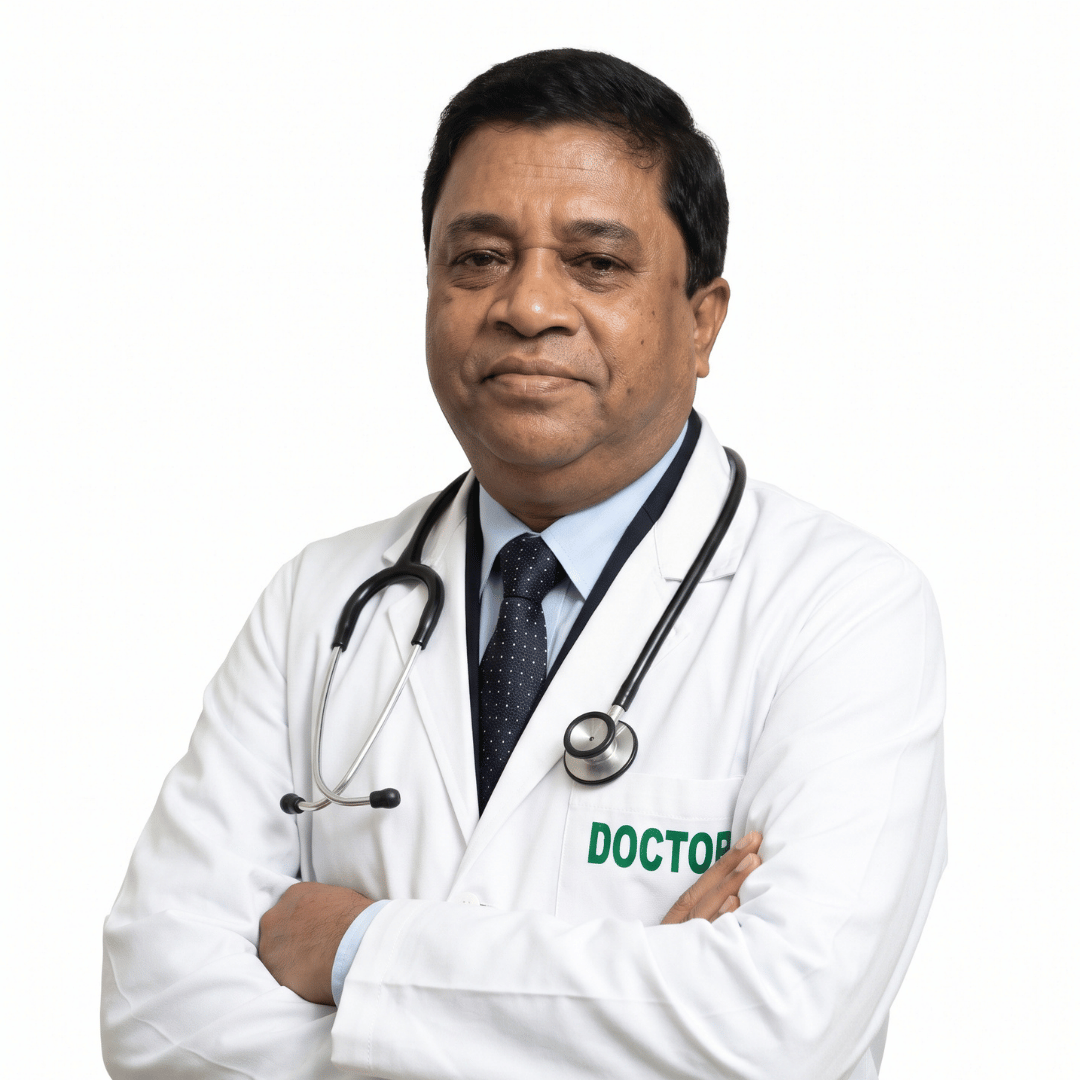
Prof. Dr. Syed Md. Elias best Orthopedic Surgeon doctor in Khulna City delivers specialized diagnostic and surgical care for complex bone, joint, spine, and trauma conditions. Looking for the best Orthopedics doctor in Khulna, individuals consult him for precise clinical assessments and advanced medical management.
🏥 Doctors Point Specialized Hospital, Khulna · Private Hospital
📍 49, KDA Avenue, Khulna
🕒 Visiting hours: 9:00am to 10.30pm (Closed: Friday)
💳 Consultation fee: ৳800
Prof. Dr. Syed Md. Elias is a Professor (Orthopedics) at Khulna Medical College & Hospital, Khulna with over 30 years of distinguished clinical and academic experience. As an eminent orthopedic surgeon and senior trauma specialist, he provides expert care for chronic bone infections, severe spinal displacement, recalcitrant joint stiffness, and painful foot nerve disorders. Looking for the best Orthopedics doctor in Khulna, patients receive comprehensive evaluations for complex fractures, lower leg stress syndromes, and degenerative joint conditions. His practice integrates multi-modal diagnostic techniques with refined surgical procedures and individualized physical rehabilitation plans.
Prof. Dr. Syed Md. Elias earned his MBBS degree and completed his Diploma in Orthopaedics (D-ORTHO Surgery), establishing a comprehensive surgical foundation in musculoskeletal medicine. He earned international recognition through his fellowship with the Royal Society for Public Health (FRSH, UK). Finding the best Orthopedic specialist in Khulna or a top Trauma Surgeon in Khulna leads patients to rely on his three decades of academic leadership and extensive operative expertise. As a senior Professor of Orthopedics, he has mentored generations of surgeon trainees while treating thousands of complex trauma, infection, and spinal cases at top government institutions.
His specialized clinical practice encompasses surgical debridement of chronic osteomyelitis, intra-articular capsular release for frozen shoulder, posterior spinal fusion for spondylolisthesis repair, excision of Morton’s neuroma, and targeted biomechanical rehabilitation for shin splints. His clinical protocol combines precision radiological imaging, bone density scanning, and functional joint testing to achieve long-term functional recovery for patients.
| Profile Field | Details |
| Full Name | Prof. Dr. Syed Md. Elias |
| Primary Specialty | Orthopedics (Bone, Joint, Trauma) |
| Secondary Specialties | Spine Surgery & Skeletal Infection Care |
| Designation | Professor (Orthopedics) |
| Workplace | Khulna Medical College & Hospital, Khulna |
| Total Experience | 30+ Years |
| Location | Khulna, Bangladesh |
MBBS – Bachelor of Medicine and Bachelor of Surgery
D-ORTHO (Surgery) – Diploma in Orthopedic Surgery
FRSH (UK) – Fellow of the Royal Society for Public Health, United Kingdom
Designation: Professor (Orthopedics)
Workplace: Department of Orthopedics, Khulna Medical College & Hospital, Khulna
Bone infections require urgent surgical cleaning.
Frozen shoulder causes severe joint stiffness.
Spondylolisthesis repair stabilizes slipping vertebrae.
Morton neuroma causes severe nerve pain.
Shin splints cause severe leg pain.
Complex fractures need urgent surgical fixing.
Spinal stenosis causes persistent back stiffness.
Rotator cuff tears limit shoulder mobility.
Knee osteoarthritis requires joint replacement care.
Ligament injuries need reconstructive joint surgery.
Carpal tunnel syndrome causes hand numbness.
Plantar fasciitis causes severe heel pain.
Osteoporosis leaves human bones very weak.
Bone tumors require early surgical biopsy.
Achilles tendonitis limits normal foot movement.
Prof. Dr. Syed Md. Elias provides comprehensive medical and surgical services across all major fields of orthopedics and complex trauma care.
Skeletal Infection Management: Specialized diagnosis and surgical debridement for acute and chronic osteomyelitis, septic arthritis, and infected fracture non-unions.
Spine Pathology & Spondylolisthesis Repair: Comprehensive management of intervertebral displacement, lumbar instability, nerve root compression, and spinal fusion procedures.
Shoulder & Joint Rehabilitation: Advanced non-surgical and surgical interventions for adhesive capsulitis (frozen shoulder), rotator cuff injuries, and joint contractures.
Foot, Ankle & Stress Syndromes: Targeted treatment for intermetatarsal Morton's neuroma, severe shin splints (medial tibial stress syndrome), and chronic gait deformities.
Thorough surgical excision of infected bone tissue accompanied by local antibiotic delivery systems to eradicate deep-seated skeletal bacterial infections.
Surgical realignment and pedicle screw stabilization of slipped spinal vertebrae to relieve spinal canal stenosis and restore structural alignment.
Precision surgical resection of the thickened, irritated interdigital plantar nerve between the metatarsal heads to permanently eliminate burning forefoot pain.
Persistent bacterial infection within the bone matrix causing sinus tracts and bone necrosis, managed via radical debridement and prolonged pathogen-specific antimicrobial therapy.
Progressive inflammation and thickening of the glenohumeral joint capsule leading to severe restriction of shoulder movement, treated with hydrodilatation, physical therapy, or capsular release.
Forward displacement of a lumbar vertebra over the bone below it causing severe lower back pain and leg radiculopathy, requiring conservative stabilization or spinal fusion.
Prof. Dr. Syed Md. Elias emphasizes thorough physical examination combined with high-resolution radiological diagnostic tools before formulating individualized treatment plans. His clinical practice prioritizes conservative non-surgical management, including physical rehabilitation and targeted injections, resorting to advanced surgical interventions only when necessary for long-term functional recovery.
Emergency Callout: Immediate emergency orthopedic medical attention is required if a patient experiences sudden onset of high fever accompanied by severe bone pain and localized redness, sudden loss of bowel or bladder control with severe back pain, or an open fracture with exposed bone.
Member, Bangladesh Medical and Dental Council (BMDC)
Fellow, Royal Society for Public Health (FRSH, UK)
Member, Bangladesh Orthopaedic Society (BOS)
Bring all past X-rays, MRI scans, CT reports, and relevant laboratory blood tests.
Keep a detailed list of current pain medications and previous surgical records.
Note down symptom duration, exact locations of pain, and aggravating factors.
Wear loose-fitting clothing for easy access during physical movement assessments.
Last Modified: October 7, 2026
Chronic osteomyelitis is diagnosed using plain radiographs, MRI scans, laboratory inflammatory markers (ESR, CRP), and bone cultures. Treatment requires thorough surgical debridement of dead bone tissue combined with prolonged target-specific antibiotic therapy. In complex cases, local antibiotic-impregnated beads are temporarily placed inside the bone cavity to eliminate localized bacterial infection.
Initial treatment for frozen shoulder includes supervised physical therapy, gentle pendulum exercises, and non-steroidal anti-inflammatory medications. Intra-articular corticosteroid injections or joint hydrodilatation can accelerate recovery by reducing capsular inflammation. If severe shoulder stiffness persists after several months of conservative therapy, surgical capsular release or manipulation under anesthesia may be performed.
Spinal fusion surgery for spondylolisthesis is indicated when forward displacement of the vertebra causes severe lower back pain, intractable leg radiculopathy, or progressive neurological weakness. Surgery is also warranted if high-grade slippage threatens spinal stability or fails to respond to bracing and physical therapy. Spinal instrumentation stabilizes the vertebrae and prevents further nerve compression.
Morton's neuroma is a benign thickening of the tissue surrounding the interdigital nerve between the toes, causing sharp burning pain or numbness in the ball of the foot. Non-surgical management includes wearing wide-toe box shoes, custom metatarsal pad orthotics, and localized corticosteroid injections. If severe pain persists, surgical excision of the affected nerve segment provides permanent pain relief.
Shin splints (medial tibial stress syndrome) are managed through rest, ice application, shock-absorbing footwear, and calf stretching exercises to reduce mechanical stress on the tibia. Athletes should temporarily modify training activities to low-impact swimming or cycling until localized bone tenderness resolves. Ignoring shin splint symptoms can lead to cortical micro-fractures and complete tibial stress fractures.
In elderly patients, reduced bone density (osteoporosis) requires specialized surgical fixation tools such as locking plates or intramedullary nails to secure delicate bone fragments. Pre-operative optimization of systemic health and early post-operative mobilization are crucial to prevent pulmonary complications and rapid muscle loss. Comprehensive post-fracture care also includes targeted calcium and vitamin D therapy to improve overall bone strength.
Spondylolisthesis involves the physical forward slippage of an entire vertebral body over another due to pars interarticularis defects or degenerative joint changes. A herniated disc occurs when the soft gel-like center of an intervertebral disc pushes through its outer ring to compress adjacent nerves without displacement of the bony vertebral body. While both cause sciatic nerve pain, spondylolisthesis often requires structural spinal stabilization.
Post-operative physical therapy begins within days of surgical capsular release to maintain joint range of motion and prevent recurrent scar tissue formation. Intensive stretching and range-of-motion exercises are continued for 6 to 12 weeks, gradually transitioning to rotator cuff strengthening. Most patients achieve significant pain relief and functional shoulder mobility within 3 to 4 months.
Patients should bring all prior diagnostic X-rays, MRI scans, CT reports, and blood test results to their appointment. Providing a complete record of past orthopedic surgeries, chronic medical conditions, and a full list of current medications facilitates an accurate evaluation. These medical records allow Prof. Dr. Elias to establish a precise diagnosis and design an effective treatment protocol.
No reviews yet — be the first to write one.
MBBS, BCS (HEALTH), D-ORTHO (BSMMU)
Orthopedics (Bone, Joint, Trauma, Spine) Specialist & Surgeon
🎯 Plantating fasciitis, Bone tumor, Achilles tendonitis, Bunion surgery, Shoulder dislocation
View Profile →MBBS, BCS (Health), D-Ortho (BSMMU)
Orthopedics (Bone, Joint, Spine) Specialist & Trauma Surgeon
🎯 Fracture repair, ACL tears, Joint replacement, Spinal stenosis, Rotator cuff
View Profile →MBBS, D-ORTHO
Orthopedics, Bone, Joint Specialist & Trauma Surgeon
🎯 Carpal tunnel, Meniscus repair, Scoliosis correction, Hip dysplasia, Tennis elbow
View Profile →MBBS, BCS (Health), D-ORTHO (BSMMU), FCPS (FP)
Orthopedics Specialist & Trauma Surgeon
🎯 Osteoarthritis care, Labral tears, Trigger finger, Stress fractures, Disk herniation
View Profile →MBBS, BCS (Health), D-Ortho (BMU), FCPS (Orthopedics, FP)
Orthopedics (Bone, Joint, Sports Injury) Specialist & Trauma Surgeon
🎯 Patellar tendinitis, Sciatica relief, Biceps tendonitis, Ankle sprains, Kyphosis correction
View Profile →MBBS (Dhaka), MS (Ortho), FRCS (Glasgow), FACS (America) trained in spine
Orthopedics (Bone, Joint, Trauma) Specialist & Spine Surgeon
🎯 Cartilage damage, Femoroacetabular impingement, Dupuytren contracture, Bursitis treatment, Joint dislocations
View Profile →MBBS, MS (Orthopedics Surgery)
Orthopedics (Bone, Joint, Trauma, Spine) Specialist & Surgeon
🎯 Laryngitis care, Thyroid disorders, Pharyngitis relief, Salivary gland, Swallowing difficulties
View Profile →All Orthopedics doctors in Khulna → · All of Khulna Division →