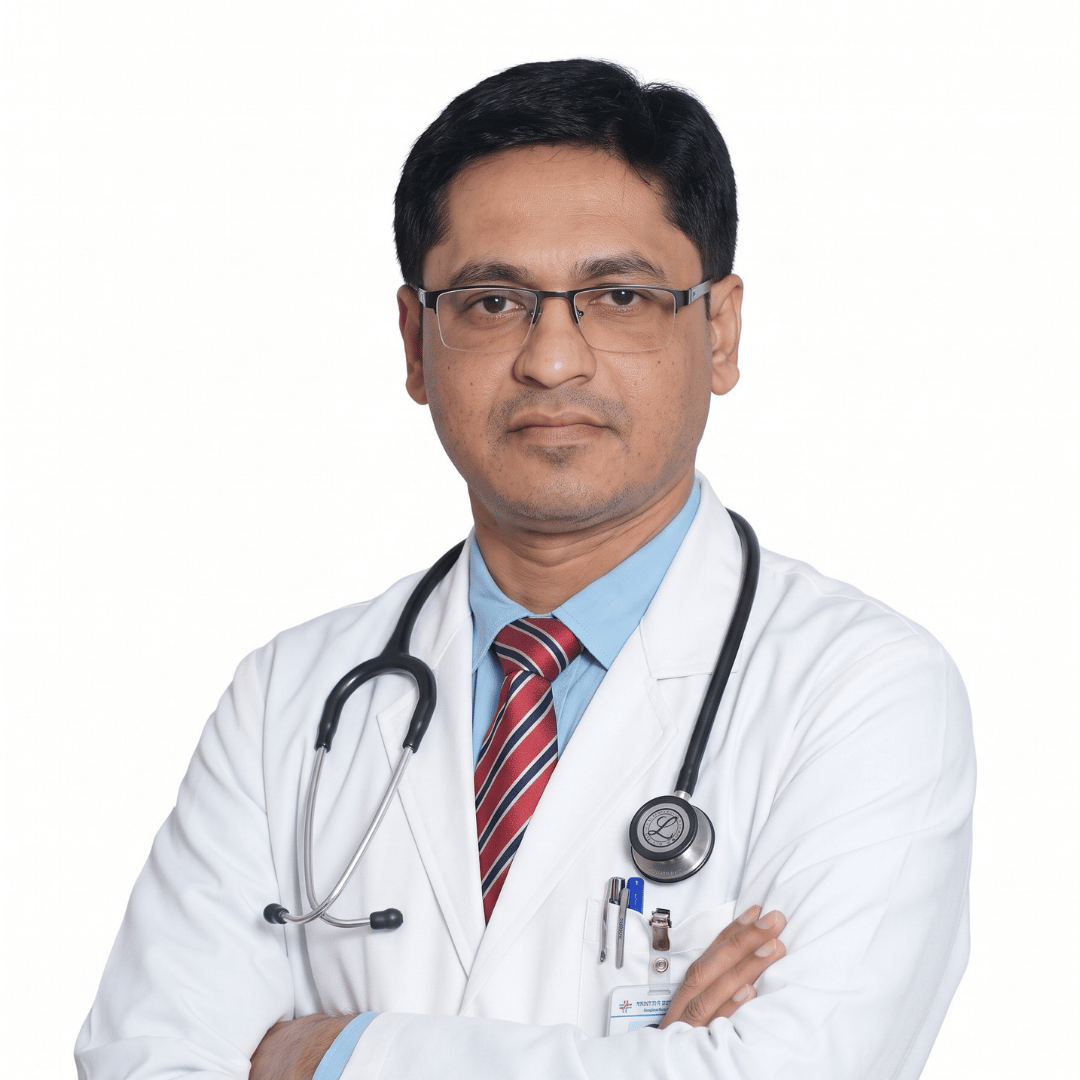

MBBS, BCS (Health), FCPS (Surgery)
General, Laparoscopic, Breast, Piles, Fistula & Colorectal Surgeon
🎯 Rectal adenocarcinoma, Piles, Fissure, Fistula, General & Laparoscopic Surgery, Breast Surgery
View Profile →
Colorectal Surgery
MBBS, BCS (Health), MS (General Surgery)
General, Breast, Laparoscopic & Colorectal Surgeon
🎯 Expert in treating: Colon & Rectal Surgery, Anorectal Disorders, General Surgery, Benign Breast Conditions
🎓 Professor, Surgery
🏛️ Khulna Medical College & Hospital, Khulna
Professor, Surgery — Khulna Medical College & Hospital, Khulna
Prof. Dr. Mohammad Mohiuddin best General, Colorectal, and Laparoscopic Surgeon in Khulna City delivers specialized diagnostic, clinical, and minimally invasive surgical care for severe gastrointestinal, anorectal, and abdominal pathologies. Looking for the best Piles, Fistula, and Colon Surgeon in Khulna, individuals consult him for precise management of complex anorectal disorders (including hemorrhoids and chronic fissures), colorectal tumors, and benign breast conditions. His clinical practice spans aggressive bowel diseases, acute abdominal emergencies, and advanced minimally invasive interventions. He integrates over 22 years of intensive surgical wisdom with elite academic leadership as a Professor of Surgery to optimize patient recovery, preserve vital sphincter function, and manage devastating abdominal surgical conditions with unparalleled academic and clinical precision.
🏥 Sunrise Diagnostic & Consultation Center · Diagnostic Center
📍 41, Shamsur Rahman Road (East Side of Shantidham Mor), Khulna
🕒 Visiting hours: 3:30pm to 4:30pm (Closed: Friday)
💳 Consultation fee: ৳800
Prof. Dr. Mohammad Mohiuddin is a highly esteemed Professor of Surgery in Khulna, with over 22 years of distinguished clinical, academic, and minimally invasive surgical experience. As an eminent General, Breast, Laparoscopic, and Colorectal Surgeon, he provides expert care for severe and complex surgical conditions, uniquely focusing on advanced, minimally invasive solutions for debilitating anorectal diseases like piles, fistulas, and fissures, alongside comprehensive colorectal surgeries and breast lump excisions. Patients requiring highly technical abdominal surgery or delicate anorectal interventions receive evidence-based treatments tailored to eradicate disease, manage acute bowel obstructions, and achieve rapid, functional postoperative recovery. His medical practice combines high-precision surgical execution with individualized, multidisciplinary critical care plans.
Prof. Dr. Mohammad Mohiuddin completed his MBBS degree, establishing a comprehensive clinical foundation in general medical sciences. Demonstrating a profound commitment to advanced surgical interventions, he entered the prestigious BCS (Health) cadre. To achieve the highest clinical proficiency, he pursued rigorous postgraduate specialization, earning his Master of Surgery (MS) in General Surgery. This premier clinical qualification equips him with the advanced anatomical and physiological expertise required to safely perform complex open and minimally invasive (laparoscopic) procedures, manage major bowel resections, and treat intricate anorectal disorders. Finding the best General and Colorectal Surgeon in Khulna leads patients to rely on his 22+ years of dedicated clinical expertise and his authoritative academic standing as a Professor of Surgery.
His primary clinical focus includes sphincter-saving surgeries for complex anal fistulas, advanced interventions for internal and external hemorrhoids, lateral internal sphincterotomy for chronic fissures, precise oncological resections for colon and rectal tumors, and cosmetic excisions of benign breast lumps. His diagnostic framework incorporates advanced colonoscopy interpretation, histopathological biopsy review, and comprehensive surgical risk stratification to formulate effective, safe surgical and survival strategies.
| Profile Field | Details |
| Full Name | Prof. Dr. Mohammad Mohiuddin |
| Primary Specialty | General, Laparoscopic & Colorectal Surgery |
| Secondary Specialties | Anorectal Disorders & Benign Breast Conditions |
| Designation | Professor (Surgery) |
| Workplace | Khulna |
| Total Experience | 22+ Years |
| Location | Khulna, Bangladesh |
MBBS – Bachelor of Medicine and Bachelor of Surgery
BCS (Health) – Bangladesh Civil Service (Health Cadre)
MS (General Surgery) – Master of Surgery in General Surgery
Designation: Professor (Surgery)
Workplace: Khulna
Hemorrhoids (Piles) require advanced interventions like rubber band ligation or stapled hemorrhoidopexy.
Anal Fissure (chronic) requires lateral internal sphincterotomy (LIS) to relieve severe pain and spasms.
Anal Fistula demands surgical fistulotomy, fistulectomy, or seton placement to preserve sphincter function.
Colorectal Polyps and Tumors demand precise surgical bowel resection and anastomosis.
Benign Breast Conditions (Fibroadenoma/Cysts) demand cosmetic, minimally invasive surgical excision.
Gallbladder Disease (Gallstones) demands Minimally Invasive Laparoscopic Cholecystectomy.
Hernias (Inguinal/Umbilical/Incisional) require laparoscopic or open tension-free mesh repair.
Acute Appendicitis requires emergency laparoscopic or open appendectomy.
Perianal Abscesses demand immediate emergency surgical incision and drainage to prevent sepsis.
Gastrointestinal Perforations demand emergency laparotomy and bowel repair.
Advanced Colorectal & Anorectal Surgery: Expert delivery of surgical interventions for painful lower digestive tract conditions, focusing heavily on distinguishing and treating piles, fistulas, and fissures with modern, sphincter-saving techniques.
Laparoscopic & General Surgery: Comprehensive minimally invasive management of gallstones, appendicitis, and complex abdominal wall hernias using keyhole incisions to significantly reduce pain and prevent recurrence.
Benign Breast Surgery: Dedicated surgical care for non-cancerous breast lumps and cysts, prioritizing cosmetic preservation and histopathological confirmation to relieve patient anxiety.
Differentiating between the bleeding of piles and the agonizing pain of a fissure is critical. Prof. Mohiuddin performs targeted therapies for each. For advanced internal hemorrhoids, he utilizes stapled hemorrhoidopexy or advanced ligation to cut off blood supply without cutting sensitive exterior skin. For chronic fissures that refuse to heal due to muscle spasms, he performs a highly precise Lateral Internal Sphincterotomy (LIS)—a tiny cut in the sphincter muscle that instantly relieves the spasm and allows the tear to heal permanently.
An anal fistula is an abnormal tunnel connecting an infected gland inside the anus to the skin on the buttocks. If the tunnel passes through a large portion of the sphincter muscle (which controls bowel movements), simply cutting it open can cause lifelong fecal incontinence. For these complex fistulas, Prof. Mohiuddin utilizes advanced techniques like Seton placement or fistulectomy with precise muscle repair, allowing the infection to drain and heal slowly without compromising bowel control.
For gallbladder removals (cholecystectomy) and appendectomies, Prof. Mohiuddin uses laparoscopy. Instead of making a large, painful incision across the abdomen, he makes tiny half-inch cuts. He inserts a high-definition camera and long instruments to perform the surgery internally. This modern technique causes drastically less tissue damage, resulting in significantly less pain, virtually invisible scars, and a rapid return to normal activities.
Patients often confuse anorectal conditions, but the symptoms dictate the surgical approach. Hemorrhoids (Piles) are swollen blood vessels that typically cause painless, bright red bleeding during bowel movements. An Anal Fissure is a physical tear in the anal lining caused by hard stool, characterized by sharp, tearing pain ("like passing glass") during and after defecation, with only minor spotting of blood. Accurate clinical diagnosis by a Professor of Surgery ensures the patient receives the correct, targeted surgical remedy.
Fibroadenomas are the most common benign (non-cancerous) breast tumors in young women. They feel like smooth, rubbery, solid marbles that move easily under the skin. While harmless, they can grow large, cause cyclical pain, and create extreme psychological distress regarding breast cancer. Prof. Mohiuddin provides expert clinical evaluation and performs cosmetic surgical removal (lumpectomy) to relieve patient anxiety and prevent future complications, always confirming the benign nature via biopsy.
Colorectal cancer often begins as a benign polyp on the inner lining of the colon or rectum that undergoes malignant transformation over several years. Early detection through colonoscopy is vital. Prof. Mohiuddin surgically removes these precancerous polyps or performs major bowel resections for established tumors, removing the diseased section of the bowel along with its intact blood supply and lymph nodes to prevent the disease from spreading.
Prof. Dr. Mohammad Mohiuddin utilizes over 22 years of profound surgical wisdom, uniquely combining his elite academic background (MS) with highly practical, minimally invasive surgical skills. His philosophy emphasizes accurate, symptom-based diagnosis for overlapping anorectal disorders, the absolute preservation of sphincter function and patient dignity in colorectal procedures, and minimizing postoperative pain through modern laparoscopic techniques.
Emergency Callout: Immediate emergency medical intervention is required if a patient experiences massive, uncontrolled bright red bleeding from the rectum, if a hernia suddenly becomes intensely painful, hard, and cannot be pushed back in (strangulated hernia - risking bowel death), or if sudden, agonizing abdominal pain occurs with a rigid, board-like stomach accompanied by high fever (suspected ruptured appendix or gastrointestinal perforation).
Member, Bangladesh Medical and Dental Council (BMDC)
Professor (Surgery), BCS (Health) Cadre
Master of Surgery (MS) in General Surgery
Crucial for Anorectal/Colon Issues: Bring any recent colonoscopy reports, fistulograms, or pelvic MRI/CT scans. Be prepared to describe your symptoms accurately (e.g., is it painless bleeding, or severe pain while passing stool?).
Crucial for Breast Issues: Bring all recent Mammograms, Breast Ultrasounds, and FNAC/Core biopsy reports.
Crucial for Surgery: Adhere strictly to the "NPO" (fasting) guidelines provided by the hospital before any scheduled procedure.
Maintain a complete list of current medications, specifically noting blood thinners (like Aspirin, Clopidogrel), which must be carefully managed prior to any surgery.
Last Modified: October 30, 2026
While both conditions cause bleeding, the defining difference is the pain. Internal piles are generally painless; you may notice bright red blood dripping into the toilet bowl during or after a bowel movement. An anal fissure, however, is a physical tear in the skin of the anus. It causes sharp, severe, tearing pain during and after passing stool (often described as feeling like passing shards of glass), usually accompanied by a small amount of blood on the toilet paper.
When the anal lining tears (the fissure), the severe pain triggers the underlying sphincter muscle to go into a violent, continuous spasm (cramp). This spasm cuts off the blood supply to the tear, which prevents it from healing and causes a deep, throbbing ache that can last for hours after a bowel movement. Prof. Mohiuddin performs a minor surgery (LIS) to relax this muscle and cure the condition.
Master of Surgery (MS) is one of the highest postgraduate clinical degrees attainable in the surgical field in Bangladesh. It signifies that Prof. Mohiuddin has undergone years of rigorous, intensive hospital-based training focused entirely on advanced anatomy, pathology, and the execution of complex major surgeries, elevating him to the rank of Professor.
No. A hernia is a physical, structural hole or tear in the abdominal muscle wall allowing intestines to bulge through. No medication can close this hole. While a tight belt (truss) might temporarily hold it in, it does not cure the defect and can cause tissue damage over time. The only definitive cure is surgery to push the tissue back and reinforce the wall with a synthetic mesh.
A fibroadenoma is the most common benign (non-cancerous) breast tumor, typically found in young women. It feels like a firm, smooth, rubbery lump that moves easily under the skin. While harmless, they can grow large and cause extreme anxiety. Prof. Mohiuddin expertly evaluates these and can remove them via a minor cosmetic surgery (lumpectomy) if they are painful or growing.
Laparoscopic (keyhole) surgery utilizes a high-definition camera and thin instruments inserted through 3 or 4 tiny (half-inch) cuts, rather than a massive 6-inch incision across the abdomen. This modern technique causes drastically less tissue damage, resulting in significantly less pain, virtually invisible scars, a lower risk of infection, and allows the patient to return to normal life in days rather than weeks.
If an anal fistula tunnel passes deeply through your sphincter muscle (the muscle that holds in your stool), cutting the tunnel open would cut the muscle, causing permanent fecal incontinence. A Seton is a specialized surgical thread that Prof. Mohiuddin passes through the tunnel and ties in a loop. It keeps the tract open to drain pus and slowly cuts through the muscle while allowing it to heal behind it, curing the fistula safely.
Yes, it is extremely dangerous. While bright red blood is a classic sign of piles or a fissure, it is also a primary early symptom of colorectal cancer, precancerous polyps, or inflammatory bowel disease. Assuming all rectal bleeding is just "piles" leads to delayed cancer diagnoses. Prof. Mohiuddin strongly advises a proper clinical examination to definitively rule out life-threatening malignancies.
No reviews yet — be the first to write one.
MBBS, BCS (Health), FCPS (Surgery)
General, Laparoscopic, Breast, Piles, Fistula & Colorectal Surgeon
🎯 Rectal adenocarcinoma, Piles, Fissure, Fistula, General & Laparoscopic Surgery, Breast Surgery
View Profile →MBBS, BCS (Health), MCPS (Surgery)
General, Laparoscopic, Breast, Piles, Fistula & Colorectal Surgeon
🎯 Colorectal, Piles, Colon & Rectum, General Surgery
View Profile →MBBS, BCS (Health), FCPS (Surgery)
M. S. in Surgical Oncology
General, Colorectal, Breast & Laparoscopic, Cancer Surgeon
🎯 Piles, Fistula, Colon, Rectum, Anus, Colorectal Surgery, General Surgery
View Profile →MBBS, BCS (Health), FCPS (Surgery)
General, Laparoscopic, Piles & Hernia Surgery Specialist
🎯 Colorectal, Piles, Anal Fissure, Fistula, General Surgery, Breast Surgery
View Profile →MBBS, MCPS, FCPS (Surgery)
General, Laparoscopic & Colorectal Surgeon
🎯 Colorectal Surgery, Piles, Fistula, Fissure, General & Laparoscopic Procedures
View Profile →MBBS, BCS (Health), FCPS (Surgery)
General, Laparoscopic, Breast & Colorectal Surgeon
🎯 Colorectal & Anorectal Conditions, Inflammatory Bowel Disease (IBD), Breast Surgeries, General Surgery
View Profile →MBBS, BCS (Health), FCPS (Surgery), FACS (USA)
Diploma in Anal Canal, Rectum & Pelvic Floor Surgery (AECS)
Special Training in Colorectal surgery (BSMMU)
Member, American Society of Colon & Rectal Surgeons
Colorectal, Laparoscopic, Laser & General Surgeon
🎯 Piles, Fistula, Colon, Rectum, Fissure, Colorectal Surgery, General Surgery, Breast Surgery
View Profile →All Colorectal Surgery doctors in Khulna → · All of Khulna Division →