
MBBS, BCS (Health), MD (Radiation Oncology)
Cancer Specialist
🎯 Chimeric antigen, Immune effector, Tumor treating, Radioisotope therapy, Oncolytic viral
View Profile →
Oncology
MBBS, BCS (Health), MD (Oncology)
Clinical Oncologist (Medical & Radiation Oncologist)
Cancer Specialist, Department of Radiation Oncology
🎯 Expert in treating: Retinoblastoma management, Neuroblastoma care, Wilms tumor, Rhabdomyosarcoma care, Hepatoblastoma management
🎓 Consultant, Department of Radiation Oncology
🏛️ National Institute of Cancer Research & Hospital
Consultant, Department of Radiation Oncology — National Institute of Cancer Research & Hospital
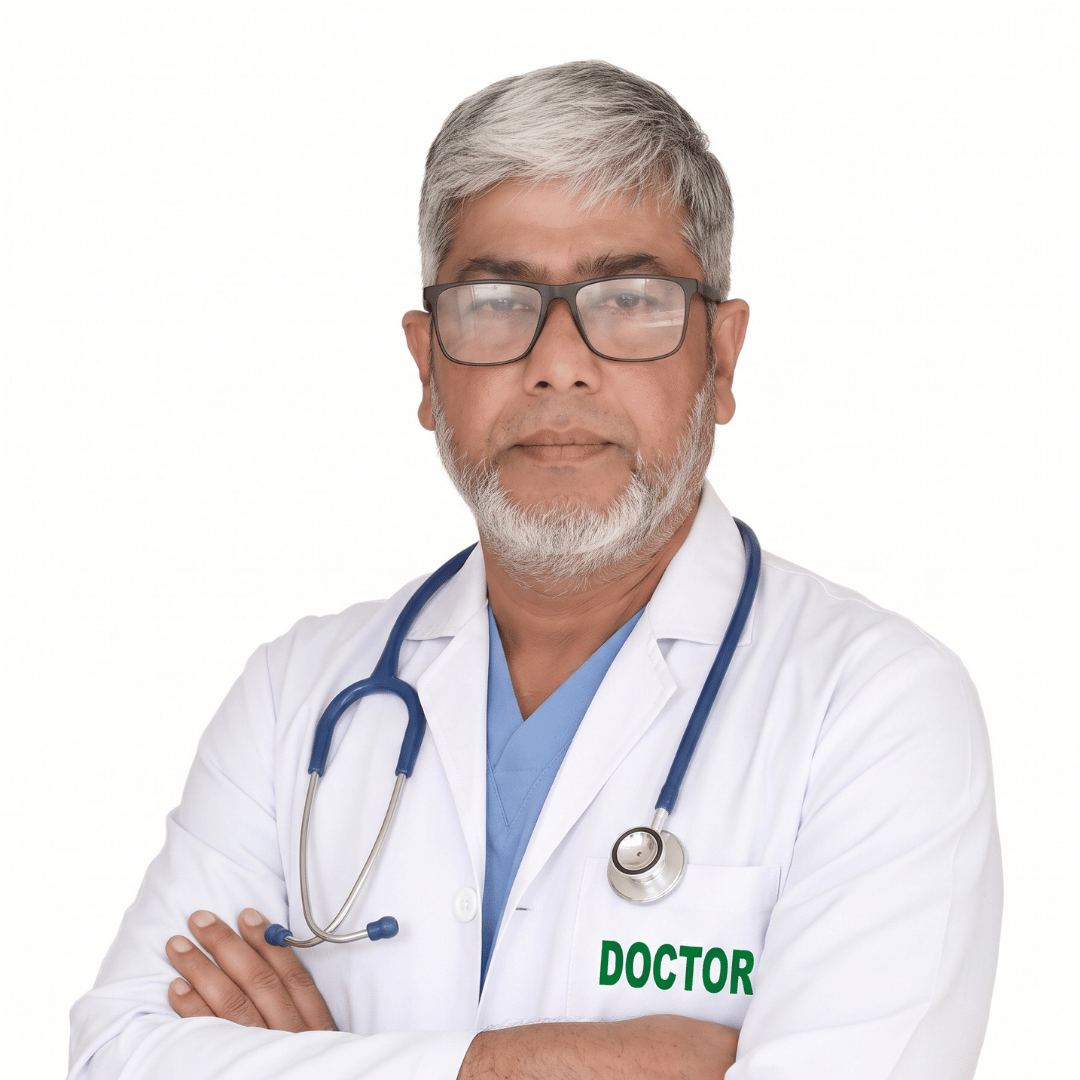
Dr. Md. Arif Hossain best Clinical Oncologist and Cancer Specialist in Khulna delivers specialized diagnostic, clinical, and therapeutic care for severe pediatric and adult solid tumors, including retinoblastoma, neuroblastoma, and Wilms tumor. Looking for the best Cancer Specialist in Bangladesh, individuals consult him for precise rhabdomyosarcoma management, hepatoblastoma care, and comprehensive clinical oncological interventions. His clinical practice spans rare childhood cancers, complex systemic chemotherapy, and advanced radiation therapy. He integrates over a decade of diagnostic wisdom with targeted oncological protocols to optimize patient survival, prioritize organ preservation, and minimize long-term treatment side effects in pediatric patients.
🏥 Khulna City Medical College & Hospital · Private Hospital
📍 25/26, KDA Avenue, Moilapota Square, Khulna Sadar, Khulna
🕒 Visiting hours: Thursday (6:00pm to 9:00pm) & Friday (10:00am to5:00 pm)
💳 Consultation fee: ৳800
Dr. Md. Arif Hossain is a Consultant of Radiotherapy at the National Institute of Cancer Research & Hospital (NICRH), Khulna, with over a decade of distinguished clinical, academic, and systemic oncology experience. As an eminent Clinical Oncologist (mastering both Medical and Radiation Oncology), he provides expert care for severe and complex malignancies, primarily focusing on highly aggressive pediatric solid tumors such as retinoblastoma, neuroblastoma, Wilms tumor, rhabdomyosarcoma, and hepatoblastoma. Patients seeking expert oncological evaluation receive evidence-based treatments tailored to halt disease progression, manage acute cancer-related crises, and achieve long-term remission. His medical practice combines high-precision cancer diagnostics with individualized, systemic patient care plans.
Dr. Md. Arif Hossain completed his MBBS degree, establishing a comprehensive clinical foundation in general medical sciences. Demonstrating a profound commitment to cancer care, he entered the prestigious BCS (Health) cadre and pursued highly rigorous postgraduate specialization, earning his Doctor of Medicine (MD) in Oncology. This advanced clinical qualification equips him with the dual expertise of a Clinical Oncologist—allowing him to seamlessly design and administer both systemic chemotherapy and targeted radiation therapy without needing to transfer the patient between different specialists. Finding the best Oncologist in Khulna leads patients to rely on his academic leadership and specialized clinical expertise at NICRH, the country's central apex cancer institution.
His primary clinical focus includes intensive neoadjuvant chemotherapy for Wilms tumor and hepatoblastoma, highly precise vision-sparing radiation and chemotherapy protocols for retinoblastoma, aggressive multi-agent systemic treatments for neuroblastoma and rhabdomyosarcoma, and comprehensive radiation treatment planning for diverse solid tumors. His diagnostic framework incorporates advanced PET-CT scan interpretation, MRI analysis, immunohistochemistry profiling, and comprehensive oncological risk stratification to formulate effective, long-term cancer survival strategies.
| Profile Field | Details |
| Full Name | Dr. Md. Arif Hossain |
| Primary Specialty | Clinical Oncology (Medical & Radiation) |
| Secondary Specialties | Pediatric Solid Tumors & Systemic Chemotherapy |
| Designation | Consultant, Radiotherapy |
| Workplace | National Institute of Cancer Research & Hospital, Khulna |
| Total Experience | 10+ Years |
| Location | Khulna, Bangladesh |
MBBS – Bachelor of Medicine and Bachelor of Surgery
BCS (Health) – Bangladesh Civil Service (Health Cadre)
MD (Oncology) – Doctor of Medicine in Oncology
Designation: Consultant, Radiotherapy
Workplace: Department of Radiotherapy, National Institute of Cancer Research & Hospital (NICRH), Mohakhali, Khulna
Retinoblastoma requires specialized systemic chemotherapy and vision-sparing local therapies.
Neuroblastoma demands aggressive multi-agent chemotherapy, surgery, and stem cell rescue evaluation.
Wilms tumor needs pre-operative chemotherapy and nephron-sparing surgical coordination.
Rhabdomyosarcoma requires intensive chemotherapy and precise local radiation therapy.
Hepatoblastoma demands systemic chemotherapy followed by complex liver resection.
Breast cancer requires post-operative radiation and systemic hormonal/chemotherapy.
Lung cancer demands concurrent chemoradiation or targeted biological agents.
Colorectal cancer requires neoadjuvant or adjuvant chemotherapy and radiotherapy.
Head and neck cancers demand highly precise intensity-modulated radiation therapy (IMRT).
Prostate cancer requires hormonal ablation and localized prostate radiation therapy.
Cervical cancer demands external beam radiation combined with brachytherapy.
Brain tumors require specialized cranial radiation and oral chemotherapy.
Gastric (Stomach) cancer needs systemic oncological evaluation and chemotherapy.
Soft tissue sarcomas require aggressive surgical margins and post-operative radiation.
Bone metastasis requires palliative radiation for rapid pain relief and fracture prevention.
Pediatric Solid Tumors: Precision management for rare and highly aggressive cancers affecting children (eye, kidney, liver, and nerve tissues), requiring extreme care to minimize long-term developmental side effects.
Clinical Oncology (Dual Expertise): Comprehensive management of both systemic chemotherapy and advanced radiotherapy, allowing for seamless, simultaneous chemo-radiation treatments.
General Radiation & Medical Oncology: Expert delivery of systemic treatments and high-energy radiation to shrink solid tumors across adults and children, leveraging his experience at NICRH.
Treating children with cancer requires vastly different protocols than adults. Dr. Hossain calculates highly precise, weight- and surface-area-based chemotherapy regimens for aggressive tumors like neuroblastoma and hepatoblastoma. He meticulously manages acute toxicities, preventing severe infections (neutropenia) and ensuring the child's vital organs continue developing safely during treatment.
When radiation is necessary for pediatric cancers (like rhabdomyosarcoma), extreme precision is required to avoid damaging growing bones and organs, which can cause severe late effects (like stunted growth or secondary cancers). Dr. Hossain utilizes highly conformal radiation planning to deliver maximum doses to the tumor while completely sparing surrounding healthy, developing tissue.
For tumors like Wilms tumor (kidney) or Retinoblastoma (eye), Dr. Hossain administers "neoadjuvant" chemotherapy to shrink the tumor. He then coordinates heavily with pediatric surgeons and ophthalmologists to surgically remove the remaining cancer, aiming to save the child's kidney function or eyesight whenever medically possible.
A rare form of eye cancer that primarily affects young children, developing in the retina. The most common first sign is "leukocoria"—a white reflection in the pupil when a photo is taken using a flash, instead of the normal red eye. If caught early, specialized chemotherapy and localized eye treatments can not only save the child's life but also preserve their vision and the eye itself.
A very aggressive cancer that develops from immature nerve cells, most commonly arising in and around the adrenal glands (above the kidneys) in infants and young children. It frequently spreads (metastasizes) to the bones and bone marrow before it is discovered. Treatment is notoriously rigorous, requiring a grueling combination of high-dose chemotherapy, surgery, and radiation.
The most common type of kidney cancer in children, typically affecting children aged 3 to 4. It usually presents as a painless, distinct lump or swelling in the child's abdomen. Wilms tumor is highly responsive to treatment. Dr. Hossain utilizes pre-operative chemotherapy to shrink the mass, allowing surgeons to remove the tumor while often saving the healthy part of the kidney.
Dr. Md. Arif Hossain utilizes over a decade of profound clinical wisdom to approach highly complex, emotionally taxing pediatric and adult malignancies. His philosophy emphasizes an exhaustive, organ-preserving approach to pediatric cancers, prioritizing rapid systemic interventions to halt fast-growing tumors, and providing deeply compassionate counseling to support parents navigating their child's terrifying cancer diagnosis.
Emergency Callout: Immediate emergency medical evaluation is required if a child with a known tumor suddenly develops a high fever (a sign of life-threatening febrile neutropenia during chemotherapy), a parent notices a new, rapidly growing hard lump in a child's abdomen accompanied by blood in the urine, or a child with a brain or nerve tumor experiences sudden, severe morning vomiting and a new squint.
Member, Bangladesh Medical and Dental Council (BMDC)
Consultant, BCS (Health) Cadre
Member, Oncology Club, Bangladesh
Bring all prior biopsy reports, ultrasound/CT/MRI scans (especially abdominal scans for Wilms/Neuroblastoma), and comprehensive blood tests.
For pediatric patients, bring complete growth charts and vaccination records.
Maintain a complete list of current prescription medications, particularly if the patient has received prior chemotherapy at another center.
Ensure both parents or primary caregivers attend the consultation, as pediatric oncology involves highly complex treatment protocols, prolonged hospital stays, and meticulous home-care instructions.
Last Modified: October 27, 2026
A Medical Oncologist specializes exclusively in drug therapies (chemotherapy, immunotherapy). A Radiation Oncologist specializes in delivering radiation beams. A "Clinical Oncologist" (like Dr. Hossain, holding an MD in Oncology) is trained and certified to administer both systemic chemotherapy and radiation therapy, providing highly integrated and seamless cancer care.
A white reflection in the pupil (leukocoria), especially noticeable in flash photography, is the classic, primary warning sign of Retinoblastoma (a pediatric eye cancer). Instead of the normal "red-eye" effect caused by blood vessels, the flash is reflecting off the white tumor inside the eye. This requires immediate evaluation by an oncologist and ophthalmologist.
Yes, Wilms tumor has a very high cure rate, often exceeding 90% if caught in the early stages. The standard treatment involves highly effective chemotherapy to shrink the tumor, followed by surgery to remove it, and sometimes radiation therapy. Most children go on to live completely normal, healthy lives with their remaining kidney function.
Children are growing, meaning their bones, brains, and organs are highly sensitive to the toxic effects of chemotherapy and radiation. Pediatric oncologists must use meticulously calculated drug doses and extreme precision in radiation to cure the cancer while minimizing "late effects"—such as stunted growth, learning disabilities, or secondary cancers later in life.
Rhabdomyosarcoma is a rare, aggressive childhood cancer that forms in the soft tissues, specifically the skeletal muscle tissue. It can occur anywhere in the body but is most common in the head, neck, urinary system, or reproductive organs. It requires rapid, intensive chemotherapy and localized radiation or surgery to stop its spread.
Hepatoblastoma is a rare cancer of the liver that primarily affects children under the age of three. Because the liver is highly vascular, surgery upfront is often too dangerous. Dr. Hossain typically administers systemic chemotherapy first to significantly shrink the tumor, making it safe for a pediatric surgeon to successfully remove the cancerous portion of the liver later.
Yes, the intensive chemotherapy required for aggressive pediatric tumors like neuroblastoma or Wilms tumor almost universally causes temporary hair loss. The hair will grow back after the treatment protocols are completed. Dr. Hossain and his team provide extensive counseling to help children and parents cope with this physical change.
The National Institute of Cancer Research & Hospital (NICRH) is the central, apex government institution for oncology in Bangladesh. It handles the highest volume of rare and complex cancer cases in the country, providing doctors like Dr. Hossain with unparalleled clinical exposure and access to multidisciplinary tumor boards required to manage difficult pediatric malignancies.
No reviews yet — be the first to write one.
MBBS, BCS (Health), MD (Radiation Oncology)
Cancer Specialist
🎯 Chimeric antigen, Immune effector, Tumor treating, Radioisotope therapy, Oncolytic viral
View Profile →MBBS, BCS (Health), MD (Medical Oncology), FCPS (Medicine, Part 2)
Cancer & Medicine Specialist
🎯 Li-Fraumeni syndrome, Multiple endocrine, Von Hippel-Lindau, Hereditary breast, Lynch syndrome
View Profile →MBBS, BCS (Health), MD (Oncology)
Cancer Specialist
🎯 Adrenocortical carcinoma, Thyroid anaplastic, Small cell, Merkel cell, Atypical teratoid
View Profile →MBBS, BCS (Health), MD (Oncology)
Cancer Specialist
🎯 Desmoplastic small, Alveolar soft, Epithelioid hemangioendothelioma, Clear cell, Inflammatory myofibroblastic
View Profile →MBBS, BCS (Health), M.Phil (Radiotherapy)
Cancer Specialist
🎯 Retinoic acid, Tumor lysis, Febrile neutropenia, Superior vena, Spinal cord
View Profile →MBBS, MPhil (Oncology)
Cancer Specialist
🎯 Osteosarcoma management, Ewing sarcoma, Chondrosarcoma care, Chordoma management, Gastrointestinal stromal
View Profile →MBBS (DMC), BCS (Health)
MCPS (Radiotherapy), MD (Radiation Oncology), MACP (USA)
European Society of Medical Oncology Certified Medical Oncologist
Cancer Specialist
🎯 Glioblastoma multiforme, Medulloblastoma care, Ependymoma management, Oligodendroglioma care, Meningioma management
View Profile →MBBS, M.Phil (Oncology), FCPS (Radiotherapy)
Fellow National Cancer Center (Singapore)
Cancer Specialist
🎯 Acute myeloid, Chronic lymphocytic, Multiple myeloma, Hodgkin lymphoma, Diffuse large
View Profile →