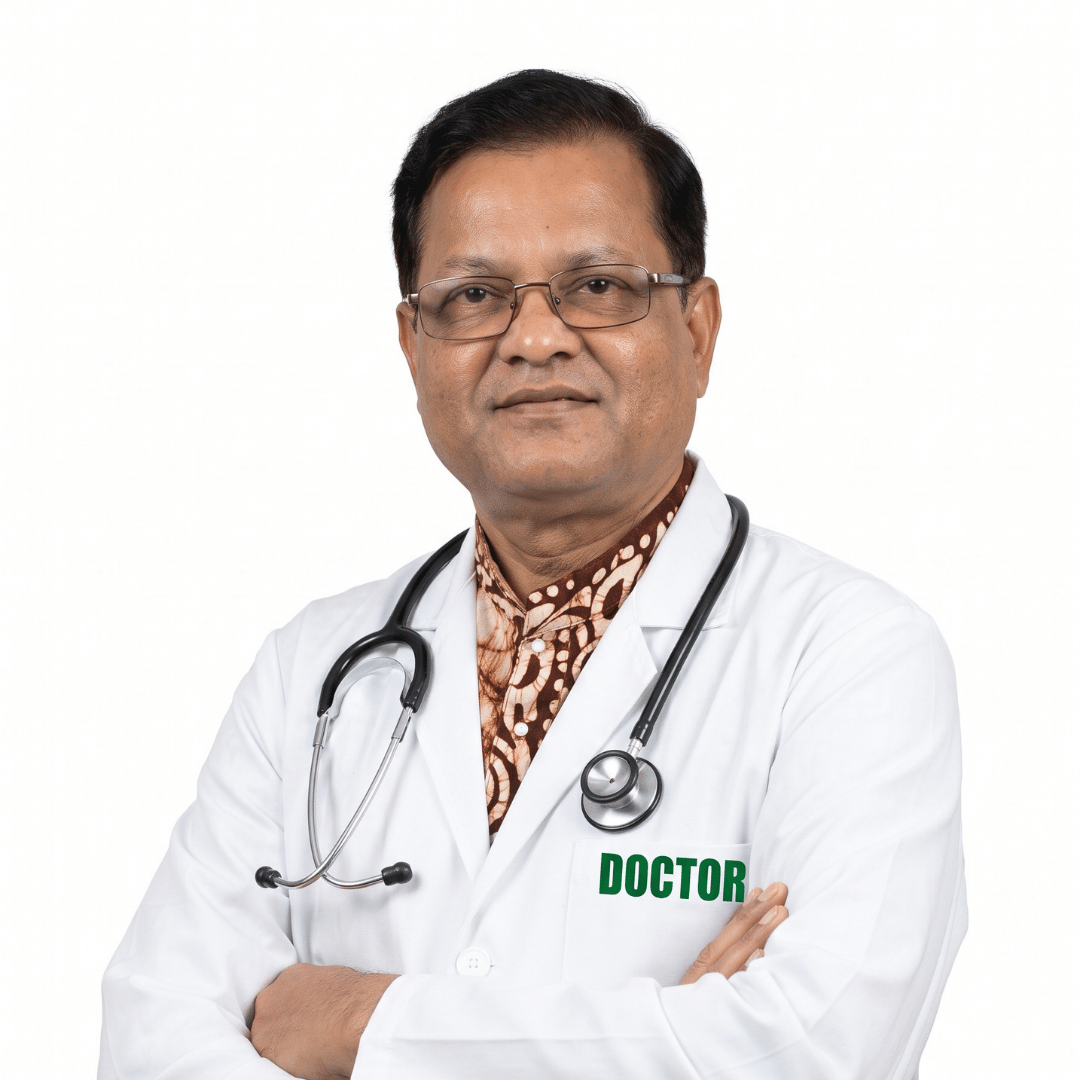
Dr. Biplob Kumar Das – Neuromedicine specialist in Khulna
Dr. Biplob Kumar Das is an Associate Professor of Neurology at Khulna Medical College & Hospital with over 27 years of distinguished clinical, academic, and hospital experience. As an eminent neurologist, stroke specialist, and neuro-medicine consultant in Khulna, he provides expert care for chronic neuropathy, sciatica pain, movement disorders, cerebral palsy, and brain tumor evaluations. Patients seeking expert clinical evaluation for persistent neurological symptoms receive evidence-based treatments tailored to restore brain and nerve function. His medical practice combines high-precision clinical neurology with individualized patient care plans.
Professional Biography
Dr. Biplob Kumar Das completed his MBBS degree, establishing a comprehensive foundation in clinical medicine. He entered the prestigious BCS (Health) cadre and pursued rigorous doctorate-level specialization in neurology, earning his MD in Neurology—a degree focused on complex disorders of the brain, spinal cord, and peripheral nerves. Finding the best Neurologist in Khulna or a top Brain and Stroke Specialist in Khulna leads patients to rely on his 27+ years of dedicated academic leadership and clinical service across premier government medical institutions. Over his nearly three decades of clinical tenure, he has successfully managed thousands of outpatient, inpatient, and emergency neurological cases.
His primary clinical focus includes specialized electrodiagnostic workups for chronic neuropathy, targeted pharmacological and physical management of sciatica pain, deep clinical assessments for movement disorders, specialized neuro-rehabilitative protocols for cerebral palsy, and diagnostic evaluations and multidisciplinary coordination for brain tumors. His diagnostic framework incorporates high-resolution neuro-imaging, nerve conduction studies, and targeted neuro-rehabilitative strategies.
At-a-Glance Profile Card
| Profile Field | Details |
| Full Name | Dr. Biplob Kumar Das |
| Primary Specialty | Neuromedicine & Clinical Neurology |
| Secondary Specialties | Stroke, Epilepsy & Neuro-Rehabilitation |
| Designation | Associate Professor (Neurology) |
| Workplace | Khulna Medical College & Hospital, Khulna |
| Total Experience | 27+ Years |
| Location | Khulna, Bangladesh |
Qualifications & Education
MBBS – Bachelor of Medicine and Bachelor of Surgery
BCS (Health) – Bangladesh Civil Service (Health Cadre)
MD (Neurology) – Doctor of Medicine in Neurology
Designation & Workplace
Designation: Associate Professor (Neurology)
Workplace: Department of Neurology, Khulna Medical College & Hospital, Khulna
Diseases Treated
Chronic neuropathy causes persistent nerve pain.
Sciatica pain radiates down the leg.
Movement disorders impair normal motor control.
Cerebral palsy requires specialized developmental care.
Brain tumor demands urgent neurological evaluation.
Severe headaches require structured neurovascular management.
Epilepsy care requires targeted anticonvulsant therapy.
Brain stroke demands urgent medical intervention.
Peripheral neuropathy causes a burning sensation in the feet.
Parkinson disease causes progressive motor tremors.
Facial paralysis requires urgent nerve rehabilitation.
Cervical radiculopathy causes radiating neck pain.
Trigeminal neuralgia causes severe facial pain.
Sleep disorders require comprehensive neurological assessment.
Memory loss requires detailed cognitive evaluation.
Clinical Specialties & Treatment Areas
Dr. Biplob Kumar Das provides comprehensive medical and diagnostic services across all major fields of neurology, clinical neuroscience, and neurovascular medicine.
Chronic Neuropathy & Peripheral Nerve Care: Electrodiagnostic evaluation (NCS/EMG), nerve conduction testing, and targeted pharmacological protocols for chronic painful neuropathies.
Sciatica & Spinal Radiculopathy: Comprehensive diagnostic evaluation and non-surgical management of lumbar disc herniation, sciatic nerve compression, and radicular back pain.
Movement Disorders & Cerebral Palsy Care: Clinical evaluation and management for Parkinsonism, essential tremor, dystonia, and neuro-rehabilitative care for cerebral palsy patients.
Stroke & Neuro-Oncology Support: Acute stroke management protocols, secondary stroke prevention, and neurological evaluations for intracranial lesions and brain tumors.
Advanced Procedure Breakdown
Nerve Conduction Study (NCS) & Electromyography (EMG)
Diagnostic evaluation of peripheral nerve and muscle electrical activity to detect chronic neuropathy severity and nerve entrapment syndromes.
Targeted Pharmacological Pain Modulation for Sciatica
Precision administration of neuro-modulatory agents paired with nerve protective vitamins to suppress overactive pain signals in compressive sciatica.
Neuro-Rehabilitative Protocol for Cerebral Palsy
Multidisciplinary assessment and physical rehabilitation strategies designed to improve motor function and spasticity in cerebral palsy patients.
Condition-Specific Deep Dives
Chronic Neuropathy
Persistent dysfunction and damage affecting peripheral nerve fibers, leading to burning pain, numbness, and sensory loss, managed through specialized nerve-calming medications.
Sciatica Pain
Radiating pain originating from compression or inflammation of the sciatic nerve root, typically caused by lumbar disc herniation or spinal stenosis.
Movement Disorders
Neurological conditions affecting the speed, quality, and control of body movements, requiring precise pharmacological modulation and neurological rehabilitation.
The Doctor’s Clinical Approach
Dr. Biplob Kumar Das combines thorough clinical neurological examination with high-resolution neuro-imaging (MRI/CT), nerve conduction studies (NCS/EMG), and laboratory biomarker assessments. His evidence-based philosophy emphasizes patient education, long-term lifestyle adaptations, and the rational prescription of neuroprotective medications to optimize overall neurological health.
Specialized Risk Factors
Emergency Callout: Immediate emergency medical attention is required if a patient experiences sudden facial drooping with one-sided arm weakness, sudden loss of speech or vision, acute severe headache of sudden onset, or a seizure lasting longer than 5 minutes.
Certifications & Professional Memberships
Member, Bangladesh Medical and Dental Council (BMDC)
Member, Society of Neurologists of Bangladesh (SNB)
Patient Visit Preparation Checklist
Bring all prior brain or spine MRI films, CT scans, EMG/NCS printouts, and relevant blood test reports.
Maintain a complete list of current neurological medications, pain relievers, and past treatment records.
Keep a detailed symptom diary noting pain triggers, seizure patterns, or motor difficulty episodes.
Ensure a family member who observes daily activities accompanies the patient to assist with history taking.
Last Modified: October 10, 2026